Resin Diamonds vs. Traditional Diamonds: Differences and Applications

When we think of diamonds, we often associate them with luxury, nobility, and even symbols of eternity. Traditional natural diamonds, with their unparalleled hardness, brilliance, and rarity, have long held a prominent position in the jewelry industry. However, with the rise of the art form of ” diamond painting ,” resin diamonds are becoming a popular new choice. So, what exactly are the differences between the two? Why are resin diamonds increasingly popular among diamond painting enthusiasts? Today, let’s delve into the world of resin diamonds and traditional diamonds and delve deeper into their differences.
What are resin diamonds?
Resin diamonds, simply put, are simulated diamond particles made from resin. They resemble traditional diamonds in appearance, but the manufacturing process and materials used are significantly different. Typically, resin diamonds are cast in a mold, solidified, and then finely polished. This manufacturing process makes resin diamonds significantly lighter than natural diamonds and allows for a variety of colors and shapes to be created on demand.
Compared to traditional diamonds, resin diamonds are more affordable. They are also inexpensive to produce, and the manufacturing process is more environmentally friendly than natural diamonds. While resin diamonds may not match the gloss and transparency of natural diamonds, they can still display considerable brilliance with careful polishing.
What are traditional diamonds?
When we talk about traditional diamonds, we’re referring to natural diamonds. They’re formed from carbon crystals formed over millions of years by geological processes under extreme heat and pressure. Diamonds are nearly unparalleled in their hardness, making them the hardest substance on Earth. Whenever light strikes their surface, they radiate a dazzling array of colors. This is why diamonds are often used in jewelry, symbolizing eternal love and preciousness.
Of course, the scarcity and high mining costs of natural diamonds also make them extremely expensive. Today, although laboratory-grown diamonds and ethical diamonds are gradually gaining popularity, the price of natural diamonds remains high.
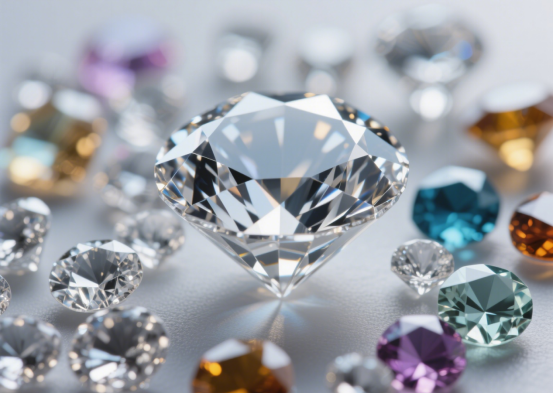
The main differences between resin diamonds and traditional diamonds
1. Materials and ingredients
Resin diamonds are primarily made of synthetic resin, whereas traditional diamonds are formed by crystallizing natural carbon under high temperature and pressure. In other words, the physical properties of resin diamonds differ significantly from those of natural diamonds. Resin diamonds are relatively low in hardness, while diamonds are practically the hardest substance on Earth.
2. Appearance and gloss
One of the most striking features of traditional diamonds is their brilliance. When meticulously cut, diamonds exhibit stunning light refraction, creating a unique “fire.” While resin diamonds mimic the appearance of diamonds, their brilliance is not as high as that of natural diamonds due to the resin’s lower refractive index. However, after special polishing, resin diamonds still exhibit a vibrant luster, making them particularly eye-catching in diamond paintings .
3. Pricing and Availability
Resin diamonds are significantly cheaper than traditional diamonds. Because the production process doesn’t involve expensive mining or complex cutting, they’re naturally much more affordable. In contrast, natural diamonds are often prohibitively expensive due to their scarcity and high mining costs.
4. Hardness and durability
Natural diamonds are renowned for their hardness, resistant to scratches from almost any material. However, resin diamonds are less hard and susceptible to scratching and abrasion. Consequently, resin diamonds may develop scratches or deform over time. In this regard, traditional diamonds clearly have an advantage in jewelry.
5. Environmental impact
The mining of natural diamonds is often accompanied by environmental damage, which has attracted the attention of many environmentalists over the past few decades. The production of resin diamonds does not involve mining at all, and the production process is relatively environmentally friendly, making it a popular choice among more and more consumers.
Why are resin diamonds more suitable for diamond painting ?
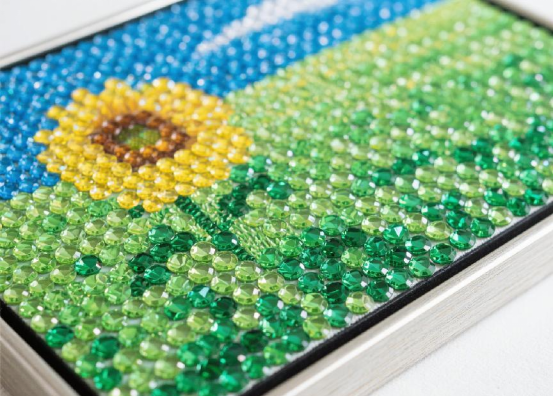
Diamond painting , a creative activity that combines art and craft, has become increasingly popular in recent years. By attaching diamond particles of various colors and shapes to a canvas, the artist slowly forms beautiful patterns. This activity is more than just a form of artistic creation; it’s also a way to relax and relieve stress. The properties of resin diamonds make them an ideal choice for diamond painting .
1. Lightweight and easy to operate
Resin diamonds are significantly lighter than traditional diamonds, a significant advantage for diamond paintings that require large quantities of diamond particles . Traditional diamonds are heavier and can be difficult to handle, especially during extended painting sessions. The lightness of resin diamonds makes it easier for artists to grasp and position diamond particles, improving the efficiency of diamond painting .
2. Cost-effectiveness
Resin diamonds are relatively inexpensive to produce, making them more accessible. Diamond painting often requires a large number of diamond particles, making traditional diamonds both costly and impractical. Resin diamonds, by comparison, are significantly cheaper, allowing more people to enjoy the art of diamond painting .
3. Rich color selection
Resin diamonds come in a wide variety of colors and can be customized to meet the color needs of diamond painting creations. Although natural diamonds are primarily colorless and transparent, resin diamonds can be easily produced in a variety of colors, greatly expanding the creative space for creators.
4. Gloss and Effect
Although the luster of resin diamonds is slightly inferior to the fire of diamonds, they still provide sufficient reflection to make diamond paintings present a dazzling visual effect. After the surface of resin diamonds is polished, they can reflect charming brilliance under light, enhancing the three-dimensional effect of the work.
5. Easy to store and transport
Resin diamonds are less hard, but they are less likely to break or chip. In contrast, traditional diamonds can be easily scratched or damaged during transportation. Resin diamonds are more shatter-resistant, making them safer to transport and store.
Summarize
Resin diamonds differ significantly from traditional diamonds in many aspects, particularly in material, hardness, appearance, price, and environmental impact. While traditional diamonds still hold a significant place in the jewelry industry, resin diamonds are becoming the preferred material for diamond painting due to their lower cost, diverse color options, and flexibility in diamond painting . For diamond painting enthusiasts, resin diamonds not only make creation easier but also offer greater freedom of artistic expression.
Whether in artistic creation or home decoration, resin diamonds will continue to coexist with traditional diamonds to meet the needs of different consumers. If you are also interested in diamond painting , you may want to try using resin diamonds, which will definitely bring you a different creative experience.