Diamond Painting Maintenance Guide: Keep Your Sparkling Creations Shining

Diamond painting , a unique handmade art form that combines elements of digital painting and rhinestone collage, has become a treasure in the hearts of many. Behind each painting, the creator embodies countless hours of time, energy, and unique emotions—perhaps a portrait customized for a special moment, or a landscape painting that took weeks of painstaking effort. To preserve this brilliance and profound meaning, maintenance is crucial. From preventative protection during creation to post-production cleaning, storage, and display, every detail is directly related to the lifespan of a diamond painting . So, how can you avoid common misconceptions through scientific and easy maintenance methods to ensure your diamond painting remains as good as new for a long time? Let’s take a look!
Creative stage: protecting the quality of the work from the very beginning
To ensure your diamond painting lasts for years, careful care should begin with every detail of your creation. Throughout this creative journey, proper handling and preparation not only enhance the quality of your painting but also lay a solid foundation for its long-term preservation.
Understand the materials, choose the right tools and techniques
Diamond painting ‘s key materials—rhinestones and canvas—directly impact the durability of the work. Therefore, understanding their properties is crucial for maintenance. Rhinestones come in two types: round and square. Round rhinestones have smoother edges and a less rigid fit, making them suitable for beginners, but the overall effect is slightly less impressive. Square rhinestones, on the other hand, offer a tighter fit, resulting in a smoother, more effective painting, but require higher positioning accuracy. Regardless of the type of rhinestone, they are typically made of resin or acrylic and have a glossy coating, so care must be taken to avoid scratches.
When creating, in addition to the standard drill pen and storage tray, it’s recommended to have a pair of tweezers handy. If the rhinestones aren’t positioned correctly, tweezers allow for more precise adjustments than fingers, preventing finger oils from contaminating the adhesive layer of the canvas. Another tip: remember to follow the “zoned adhesive” principle. Remove the protective film from only a small section of the canvas at a time, completing that area before moving on to the next section. Exposing a large area of the canvas at once allows dust to easily enter, causing the adhesive to gradually deteriorate. Unpasted areas can also oxidize, affecting the adhesion of the rhinestones.
Create an ideal creative environment
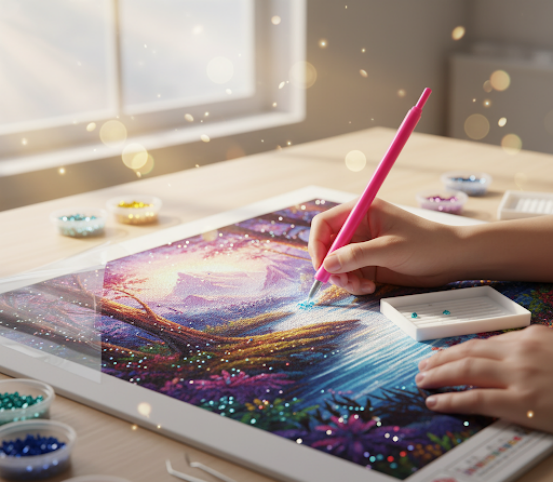
The creative environment is crucial, as it not only impacts the precision of the work but also indirectly affects the lifespan of the materials. First, ensure adequate lighting: during the day, choose a location with ample natural light. At night, it’s recommended to use an LED desk lamp with a diffuser to avoid direct sunlight, as strong light can accelerate the loss of the canvas’s adhesive. Furthermore, insufficient lighting can easily lead to inaccurate rhinestone positioning and scratch the surface during repeated adjustments.
A spacious work surface is also essential: organize the rhinestones so that different colors don’t mix. Also, leave enough space for the canvas to avoid wrinkles and even rhinestones falling off due to cramped space. Speaking of which, a comfortable chair with a backrest can help prevent you from accidentally touching the applied rhinestones when bending over for long periods of time.
A dry and well-ventilated work environment is also crucial. Humid conditions can dampen the canvas’s adhesive layer, causing the rhinestones to fall off. If you’re working during a humid season, place a bag of desiccant near your desk to minimize the effects of moisture.
Post-Complete Care: Cleaning, Storage, and Display
Once you’ve finally attached the last rhinestone to your diamond painting , maintenance is just beginning. During this phase, you need to manage external factors like dust, light, and humidity, extending the life of your work through effective cleaning, storage, and display methods.
Cleaning: Gently remove dust and avoid chemical cleaning agents
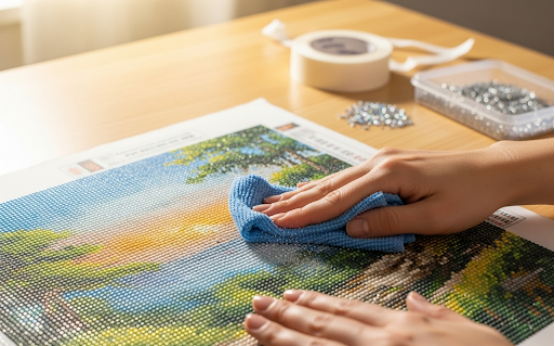
Diamond painting surfaces easily accumulate dust, especially if left unwashed for extended periods. Dust can penetrate the adhesive layer, affecting the aesthetics of the painting and accelerating the aging of the material. Avoid using chemical cleaners when cleaning. It’s best to use a soft microfiber cloth (any type of eyeglass or lens cloth will do). Gently wipe along the direction of the rhinestones, avoiding repeated rubbing. Square rhinestones, in particular, have delicate edges, and excessive friction can easily cause the luster to dissolve.
For stubborn stains, never use a damp cloth, as moisture can break down the canvas’s adhesive layer. You can use tweezers to gently pick out the stain, or use a hair dryer on cool air to gently remove dust (note: keep at least 30 cm away and avoid using hot air). Be sure to avoid using alcohol or dishwashing liquid, as these chemical cleaners can damage the rhinestone’s glossy coating, ultimately causing it to discolor or lose its luster.
Storage: Avoid temperature and humidity fluctuations to prevent physical damage
If you don’t plan to display your work for the time being, special care should be taken to prevent moisture, pressure, and fading when storing it. Ideally, the temperature should be between 15-25°C and the humidity should be controlled between 40% and 60%. Avoid storing diamond paintings on balconies or in humid areas, and avoid placing them near heaters or air conditioners, as high temperatures can cause the canvas’s adhesive to lose its grip.
When storing diamond paintings , it’s best to place them in an acid-free dust bag and place them in a cardboard box. The cardboard box effectively protects the work from deformation and can be filled with desiccant to ensure it stays dry. Be especially careful not to stack multiple paintings, as this can cause the rhinestones on the lower layers to shift due to pressure. For larger paintings, it’s best to lay them flat on top of a wardrobe, away from anything with a pungent odor.
Display: Good protection and reduce external interference
When displaying, avoid direct sunlight. Ultraviolet rays can fade the rhinestones and yellow the canvas. If you intend to display it near a window, draw a gauze curtain or hang the painting on a shady wall. When framing, choose a frame that is 2-3 cm larger than the painting and insert cardboard inside the frame to maintain a distance of approximately 5 mm between the frame glass and the rhinestone surface. This effectively prevents direct pressure on the rhinestones, minimizes gloss loss, and reduces interference from reflections from the glass.
When displaying your artwork, avoid hanging it in high-traffic areas like hallways or kitchens, as this can easily cause collisions. If you have children or pets at home, it’s recommended to hang the artwork slightly higher (at least 1.5 meters above sea level) to prevent them from accidentally scratching or bumping into it.
Avoid these common misunderstandings to avoid “irreversible damage”
When caring for diamond paintings , many people make common mistakes due to negligence or misunderstanding, which can cause irreversible damage to the work. Here are a few common mistakes to avoid!
Myth 1: Wipe the canvas with water after it gets dusty
Many people tend to wipe dusty canvases with a damp paper towel. This, however, can dissolve the adhesive layer, preventing the rhinestones from adhering securely. The correct approach is to gently remove dust with a dry, soft-bristled brush. If the adhesive layer weakens, apply a small amount of acid-free glue to the edge of the canvas to strengthen it.
Misconception 2: Use 502 super glue when rhinestones fall off
Some people use strong glue like 502 to repair fallen rhinestones. Never do this! This glue will not only corrode the rhinestones but also leave difficult-to-remove marks on the back of the canvas. The correct method is to use clear white glue or a special diamond painting adhesive. Gently apply it to the fallen area and press the rhinestone with tweezers.
Misconception 3: Ignoring minor injuries without long-term inspection
their diamond painting after finishing it , only realizing the severity of the problem when large areas of rhinestones have fallen off. It’s recommended to check monthly for any signs of rhinestone shifting, warping, or other issues. Promptly repairing minor damage can effectively prevent further problems.
Conclusion
diamond paintings isn’t just about cherishing the creative time; it’s about preserving that sparkling beauty. Every gentle wipe and every careful storage helps extend the life of this “fingertip art.” By following these care guidelines, your diamond painting will not only shine long-lastingly in your home , but will also continue to carry the emotions and memories of its creation, radiating an unchanging brilliance through the passage of time.