diamond painting pattern for you : from simple to complex

Diamond painting , a creative activity that blends art and craft, has become a way for many people to relax and express themselves in their daily lives. With a growing number of enthusiasts, choosing the right pattern has become a crucial step. So, how do you choose a diamond painting pattern based on your skill level, time commitment, and creative needs ? Today, we’ll discuss how to find the pattern that best suits you, from simple to complex.
Beginners: Start with simple patterns
1. Choose a simple geometric pattern or a single shape
For beginners, it’s recommended to start with simple patterns, such as geometric shapes, simple floral designs, or abstract art. Why? These patterns are characterized by their clean design and relatively small number of diamond particles, making them suitable for those new to diamond painting . Simple patterns can help you quickly master the application techniques and familiarize yourself with the overall diamond painting process without overly complex tasks.
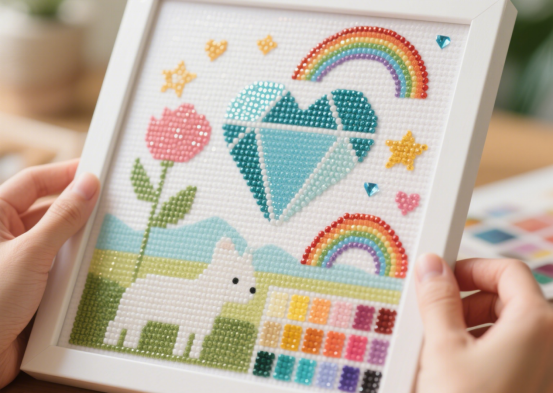
For example, choosing a simple “love” pattern or geometric shapes (such as squares and circles) as a starting point will not only allow you to complete the work quickly, but also inspire your creative confidence. Beginners can give priority to these types of patterns, and they will have a clear sense of accomplishment after completion.
2. Pay attention to color matching and quantity
Beginners don’t need to challenge themselves with complex color combinations all at once. When choosing patterns, it’s best to opt for designs with fewer colors and simpler combinations. For example, consider monochromatic landscapes, minimalist animal prints, or graphic designs with fewer elements like rainbows and stars. This way, you can avoid feeling lost in an overabundance of colors.
Additionally, some patterns with fewer color blocks and clear shapes will make the selection of diamond particles easier.
Intermediate stage: gradually increasing difficulty and details
1. Choose a pattern with a gradient effect
Once you ‘ve mastered diamond painting and want to challenge yourself with more artistic effects, try patterns with gradients. For example, natural elements like sunsets, skies, and flowers often feature color transitions, making these patterns suitable for intermediate enthusiasts who have already mastered the basic techniques. Gradients often require the use of more colors, adding a sense of depth and sophistication to the work.
The challenge of gradient patterns is that you need to gradually change the color according to the changes in the color blocks, and ensure that each layer of color transitions naturally and seamlessly. At this time, the collage technique of diamond painting also requires more precision and patience.
2. Try adding more detailed patterns
As your skills improve, you can choose patterns with more details, such as landscapes with intricate patterns, animals, or portraits. These patterns contain more small details and require more patience and care.
For example, if you want to try a floral pattern, you can choose a design with different petal shapes instead of just a general flower outline; or try painting some detailed landscapes, such as mountains and lakes. Intermediate pattern design allows you to gradually improve your diamond painting skills and help you develop a stronger visual understanding.
Advanced stage: Challenge complex and detailed patterns
1. Try portraits or detailed landscapes
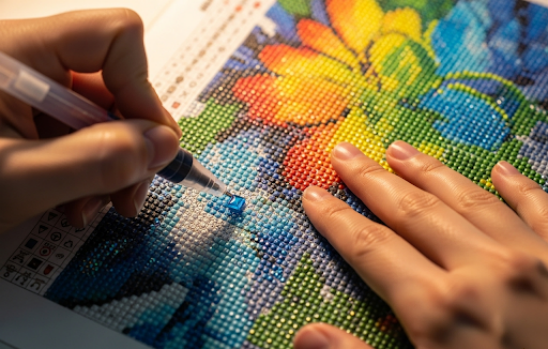
For diamond painting experts, the most challenging works are portraits or detailed landscapes. These works often require a variety of colors and high-precision stitching techniques, as well as patience and meticulousness. The detailed expression of portraits, animal portraits, or landscapes often requires a more delicate arrangement of diamond particles, which greatly tests the artist’s meticulousness.
When you choose this type of pattern, you need to consider the realization of every layer of detail, and you need to spend more time and energy on color matching and particle selection. Especially in the production of portraits, the detailed depiction of facial features is a major challenge.
2. Precise pattern contrast and shading
Diamond painting, a complex art form, often features rich shading and contrasting depths. These designs involve a large number of diamonds and a mix of colors. Mastering these complex patterns requires not only excellent color matching skills but also a strong sense of space and sensitivity to the effects of diamond particles.
For example, you could choose a complex city nightscape or an abstract art pattern with contrasting light and shadow, challenging yourself to arrange diamond particles in a high-contrast image. This type of pattern fully demonstrates the artistic effect of diamond painting and will be very visually impactful when completed.
Tips for choosing patterns
- Match the difficulty of the pattern to your time: When choosing a pattern, consider your time constraints. If you’re short on time, choose a simpler, quicker design. If you have more time and want to challenge yourself, choose a more complex pattern.
- Difficulty of discerning patterns: The detail, color, and number of particles in a pattern are important criteria for determining difficulty. Generally speaking, the more colors and the more intricate the details, the greater the difficulty. Beginners can start with single- or two-color patterns, gradually moving to multi-color and gradient effects.
- Personalized Choice: Whether it’s a simple geometric shape or a complex portrait, choosing a theme that you like makes the diamond painting process more interesting. You can choose a pattern that suits your personal style and don’t have to be bound by the choices of others.
- Consider the type of diamond grain used: Some diamond painting patterns use diamond grains of different shapes (such as round, square, etc.). When choosing a pattern, make sure the grain type matches the chosen pattern to achieve the best effect.
Summarize
Choosing the right pattern for you isn’t just about challenging your skills; it’s also about enjoying the joy of the creative process. Whether you’re just getting started, an experienced intermediate, or even a master seeking a higher level of challenge, the world of Diamond Painting offers a rich creative space. From simple to complex patterns, you can gradually hone your skills and create works that are both beautiful and rewarding.
Remember, choosing the right pattern will not only help you complete your diamond painting smoothly , but also make the creative process more enjoyable. So, no matter what pattern you choose, the most important thing is to enjoy the process and unleash your creativity and passion!