Easily fix diamond painting canvas wrinkles: Practical leveling techniques revealed

Whether you’re new to diamond painting or a seasoned veteran, you’ve likely experienced the frustration of unpleasant wrinkles on your canvas more than once. These uneven marks are not only visually irritating, but they can also affect the placement of the diamonds, ultimately affecting the overall aesthetic. However, with a few simple techniques, these minor issues can be easily resolved, restoring your canvas to perfect condition. Below, we’ll share several tried-and-true techniques to see which works best for you.
Heavy object pressing method: the simplest and most natural way to level
Diamond painting kits typically come rolled up, which is one of the main causes of wrinkles in canvas. Upon receiving your kit, first lay the canvas flat on a clean, flat surface or floor. Next, place a few heavy books or other flat, weighted objects (like stacked canvases) on top of the canvas. This will naturally apply pressure. Allowing the weight to sit for a few hours, or even overnight, will allow the fibers of the canvas to recover, and wrinkles will naturally fade or even disappear. This method is incredibly easy, requires almost no tools, and is ideal for addressing minor wrinkles without affecting the adhesive.
Reverse Rolling and Pressing: A Tip for Restoring Flatness to Curled Canvas
Sometimes, the edges of a canvas curl. The reverse rolling method is an effective solution. First, lay the canvas on a clean surface. Once you’ve determined the direction of the curl, gently roll it in the opposite direction. Be careful to apply even pressure and avoid excessive force. After rolling, let it rest for a while until it has adjusted to its new shape before slowly unrolling it. It’s actually quite simple; simply keep the canvas clean and dust-free to effectively reduce curling.
Low-temperature ironing: Quickly remove stubborn wrinkles, but be careful
Ironing is a very effective method for stubborn wrinkles. However, be careful with the temperature and technique when ironing, as this can damage the canvas. First, set your iron to a low setting (always use a non-steam setting). Then, lay the canvas face down on a flat surface and cover the back with a clean towel or cotton cloth. Test ironing on the edges of the canvas to ensure it doesn’t damage the canvas. If this test is successful, proceed to ironing with quick, gentle strokes. Remember not to dwell on the same spot for too long or apply excessive pressure. Most importantly, never use water or steam, as this can affect the adhesive properties of the canvas.
Homemade wrinkle-removing spray: Get rid of wrinkles without an iron
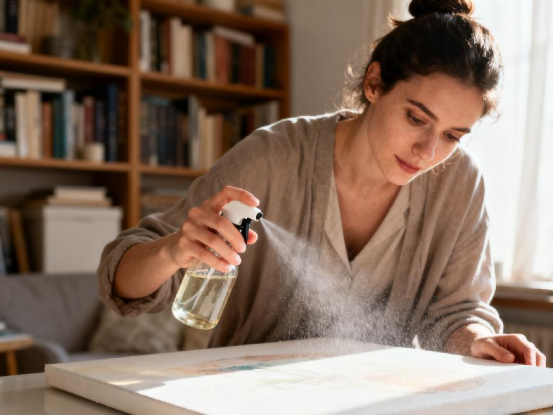
If you don’t want to use an iron or don’t have one at home, don’t worry. You can actually make a homemade wrinkle-removing spray that’s both simple and gentle. You’ll need: 1 3/4 cups of water, 1 tablespoon of distilled white vinegar, and 1 teaspoon of conditioner. Pour these into a spray bottle, shake well, and you’re ready to go. Before using, it’s a good idea to do a small test on a hidden area of the canvas to see if it affects the color of the design. If the test is OK, place the canvas face down on a clean surface and spray evenly from 6-10 inches away from the back of the canvas. Don’t spray too much, and if there is any excess liquid, gently wipe it off with a clean cloth. Once the canvas is completely dry, you’ll be surprised to see that the wrinkles will gradually and naturally stretch out.
Bubble treatment method: “wrinkle” treatment techniques under protective film
Sometimes, wrinkles on canvas aren’t caused by the canvas itself, but by air bubbles trapped under the protective film. This is common, but don’t be alarmed. Use a small utility knife or pen knife to carefully cut a straight line across the air bubble. Be careful not to scratch the canvas underneath; just gently cut through the protective film. Then, gently press the edges of the cut area flat, and the air bubble will disappear. This method is actually very simple; just be careful, especially controlling the pressure to avoid damaging the canvas.
Heating Pad Method: Gentle heating to flatten the canvas
If you find ironing too direct or are unsure about the temperature, try using a heating pad. This method is gentler and just as effective. First, lay a towel on a flat surface, then place a heating pad on top, and then cover with another towel. Next, place the canvas face up on the top towel, weighing it down with something like a baking sheet, and finally, add something heavy on top. Set the heating pad to low or medium heat for 10-15 minutes, then turn it off and let the canvas cool naturally. The continuous warmth will help the canvas return to its original flatness without the risk of direct ironing.
Summary: Multiple methods, find the one that suits you best
for dealing with wrinkles in diamond painting canvas. The key is to choose the right method based on the severity of the wrinkles and your specific situation. For minor wrinkles, try heavy pressure or reverse rolling. For stubborn wrinkles, low-temperature ironing or a heating pad are more effective. If you’re concerned about damaging the canvas, making a homemade wrinkle-removing spray is both safe and effective. For air bubbles, use the air bubble treatment method. Experiment with a few methods until you find the one that works best for you. You’ll be able to successfully eliminate wrinkles, enjoy the joy of diamond painting , and ultimately create a perfect work.