diamond painting ? Teach you to pick the one that “soul fits” with the room

Lately, people have been asking me about buying a beautiful diamond painting , only to find it looks like a patch or suffocates the wall. It’s a real dilemma. So, how do you choose the right size?
In fact, choosing the right size for a diamond painting goes far beyond simply looking good; it holds many secrets to a room’s aesthetics! The right choice can instantly elevate a room’s style and even transform its entire atmosphere. The wrong one can make even the most exquisite pattern seem out of place. Today, let’s discuss how to choose the perfect diamond painting based on different room characteristics, wall conditions, and decorative needs .
Step 1: Look at the “character” of the room. Function determines the size and tone.
Every room has its own unique “character”: the living room emphasizes grandeur, the bedroom needs warmth, and the study prefers tranquility… Therefore, when choosing the size of diamond painting , the first step is to conform to the “character” of the room.
Living room: the undisputed “visual protagonist”
As the home’s “front,” the living room typically needs a certain presence. If your living room is larger than 20 square meters and has ample wall space (for example, a sofa backdrop exceeding 3 meters), then a larger diamond painting , perhaps 80cm x 100cm or larger, is a surefire way to go. Large landscape paintings, such as starry skies or mountain scenery, can instantly elongate the space and captivate guests as they enter.
If you live in a smaller apartment with a living room under 15 square meters, don’t go for the large size; a medium-sized painting, 60cm x 80cm, is more effective. Simple floral or geometric patterns, for example, can fill the empty space without overwhelming the space, creating a sense of exquisite smallness.
Bedroom: Gentle “atmosphere”
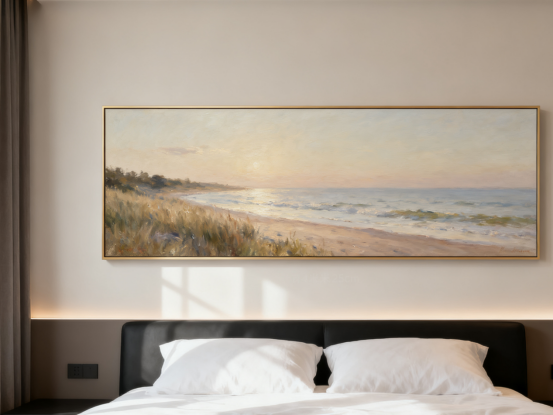
The bedroom, after all, is a place for rest, so the choice of diamond painting should be a bit more sensible—not too eye-catching, yet warm and inviting. The headboard wall is the most suitable spot, with dimensions between 50cm x 70cm and 60cm x 80cm being ideal. Too large and the space might feel oppressive; too small and it might seem like a patchwork. You can opt for abstract Morandi-inspired patterns or simple moon or cloud designs; just a glance before bed can soften your mood.
If there is a dressing table or leisure corner in the bedroom, you can also consider hanging a small painting of 30cm×40cm, such as a cute cat or a healing short sentence. Just one look at it will instantly improve your mood.
Study: Low-key “temperament assistance”
A study room needs a quiet and calming atmosphere. Diamond painting is best left unseen, not overly ostentatious. For example, for the wall above a desk, small paintings measuring 30cm x 40cm or 40cm x 50cm are ideal. Vintage maps and calligraphy patterns create a subtle yet cultural feel. Glancing up from a book and seeing these works won’t distract you.
If your study has a large, blank wall, such as across from a bookshelf, you can boldly choose a medium-sized painting, 70cm x 90cm. However, keep the pattern simple. Paintings with a traditional Chinese ink-and-wash landscape or architectural styles with bold lines can help maintain a tranquil atmosphere in your study.
Children’s room: a lively “growth partner”
A child’s room should be filled with playful playfulness, so diamond paintings should be sized to be easily appreciated. We recommend choosing paintings measuring 40cm x 50cm to 50cm x 70cm, ideally hung within the child’s line of sight (1.2 to 1.5 meters). Cartoon characters, fairytale scenes, and animal park motifs are all suitable. The vibrant colors and cute designs not only stimulate a child’s imagination but also add a touch of life to their room. Furthermore, the style can be easily changed as the child grows.
Step 2: Measure the wall “size” accurately. Proportion is more important than size.
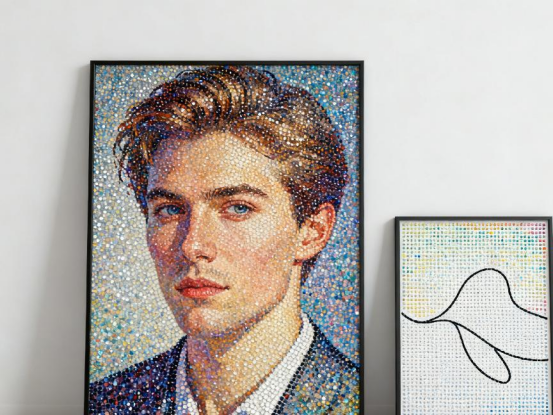
When choosing a diamond painting , many people focus solely on the centimeters, often overlooking the proportional relationship between the wall and the painting. Remember this golden rule: The width of the diamond painting should ideally be between 1/3 and 2/3 the width of the wall.
For example, if your home has a 3-meter-wide wall, then a 1-2-meter-wide painting would be the most visually harmonious. If the wall is narrower, such as a 1.5-meter-wide entryway wall, a 50-80cm-wide painting would be most suitable, leaving space on both sides to avoid appearing crowded.
Of course, flexibility is required for special circumstances. For example, if there are windows, doors, or shelves on the wall, the diamond painting should be placed away from these elements. For example, on the wall below a window, the width of the painting should be smaller than the distance between the window and the walls on both sides to avoid visual conflict. If the wall is already covered with photos, a smaller diamond painting , around 30cm x 30cm, can be a great finishing touch.
Step 3: Follow the furniture and let the picture and furniture talk
Diamond painting is not isolated, it needs to be properly matched with the surrounding furniture to achieve the best effect. Especially for paintings hung above furniture, the size should be coordinated with the furniture.
- Sofa background wall: The painting should be 60%-80% of the sofa’s length. For example, a 3-meter-long sofa with a 1.8-2.4-meter diamond painting and 30-60cm of blank space on the left and right will create a particularly balanced visual effect.
- Bedside: The width of the painting should be smaller than the width of the bed (for example, for a 1.8-meter bed, choose a 1.2-1.5-meter wide painting), and it should be hung 20-30 cm above the head of the bed. This will not be oppressive and will add a sense of warmth.
- Desk/dining table: The painting above the table should be “smart and compact,” ideally 10-20cm narrower than the desk. For example, a 1.2-meter desk with a 1-meter-wide painting will not obstruct your view when you’re working, but still allow you to appreciate the beauty when you look up.
Step 4: Don’t forget the details of the pattern, the size affects the “refinement”
One last little secret: the complexity of the pattern also determines the size of the diamond painting .
- For complex patterns (such as portraits, floral arrangements, etc.), be sure to choose large-sized paintings (80cm×100cm or more) so that the details can be fully displayed and the color and arrangement of each small diamond can be clearly seen.
- For simple patterns (such as line drawings or monochromatic gradients), small to medium-sized pieces (40cm x 60cm to 60cm x 80cm) can effectively highlight the design. A simple “wave” painting placed in the entryway, while compact, creates a sense of sophistication that is both simple and sophisticated.
Finally: The “Lazy Man’s Formula” for People Who Get Dizzy
If you’re still confused, try this formula:
Diamond painting size = length of main furniture in the room × 0.7 + blank space on the wall × 0.3
For example, the sofa in the living room is 2.5 meters long, and the total distance from the two sides of the sofa to the wall is 1 meter. Then the length of the painting is approximately:
2.5 × 0.7 + 1 × 0.3 = 2.05 meters. The size of 200cm×150cm is very suitable.
In short, there’s no set size for a diamond painting . The most important thing is to make it resonate with the rhythm of life in the room—large sizes are suitable for immersive creation, while small sizes allow for quick completion and brighten up the space. I hope that what you choose is not just a painting, but a “space companion” that will share countless warm moments with you!