Do Diamond Painting coasters need to be sealed after completion? Full Guide

Before we begin, let me clarify that this article will naturally mention diamond painting several times, as it is a core keyword. As someone who has been involved in diamond painting for a long time, I’ve noticed a common question, but one with vague answers online: Do diamond-painted coasters need to be sealed after completion?
To be honest, I was also confused about this when I first made coasters. Especially since coasters are a bit different from regular diamond painting coasters—they are carried around, come into contact with water, are exposed to heat, and are used frequently. So, is “sealing” really necessary? This article will thoroughly break it down for you, from practical usage scenarios to different sealing methods and the differences before and after sealing, so that you won’t hesitate after completing your diamond painting coasters.
Table of Contents
Why do many people ask: Do diamond painting coasters need to be sealed?
If you’ve just finished the coaster project, you might have the following concerns:
- Worried about the coaster falling off: The coaster rubs against the bottom of the cup frequently, will it loosen over time?
- Fear of water damage: Will cold water droplets or hot tea steam cause the glue to come loose?
- To prevent stains from getting stuck in the crevices: especially for round rhinestone coasters, the crevices are particularly prone to trapping dust.
These concerns are perfectly normal. After all, coasters aren’t just for hanging on the wall to admire; they’re for daily use. Therefore, the conclusion of this article regarding “Do diamond painting coasters need to be sealed after completion?” isn’t a simple “yes” or “no,” but rather depends on your usage habits. Therefore, we need to first understand one thing—what are the benefits of sealing them?
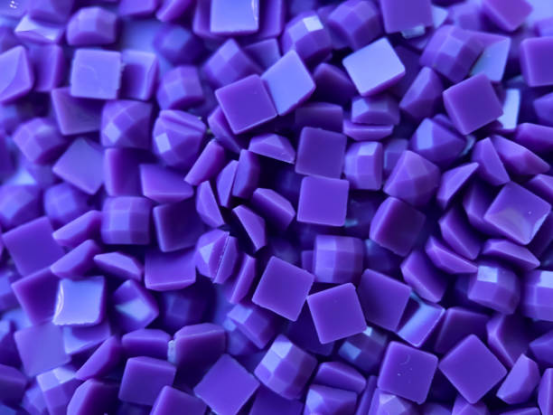
Three main benefits of diamond painting coaster sealing
1. Prevents drill bit loss: Extends service life (especially for everyday users).
Coasters are different from regular canvases; they rub against the bottom of cups and glasses. A good seal is indeed effective if you don’t want the drill to loosen after two or three months.
In particular, the following situations:
- Do you use coasters every day?
- The tabletop material is on the harder side (wooden table, marble table).
- The adhesiveness of the drill itself is generally
In short: the more frequently it is used, the more it needs to be sealed.
2. Waterproof: It is not afraid of condensation.
Once sealed, it forms a transparent protective film, almost equivalent to “waterproof”. A few times I placed an iced Americano on an unsealed coaster, and water droplets seeped in through the gaps, causing the edges of the coaster to become noticeably loose. However, this problem doesn’t occur at all with a sealed coaster.
3. Easier to clean: No more getting stuck with dust.
After sealing, the surface will become much smoother (depending on the sealing material used), and dust or stains will not get stuck in the crevices; a gentle wipe will restore it to cleanliness.
When is it “not necessary” for a diamond painting coaster to be sealed?
To make the conclusion more objective, I’ve also compiled examples of the opposite of sealing. Not all coasters need to be sealed; for example:
- You’re just using it for display; you won’t actually put the cups in it.
- What you made was a gift, just a “decorative” coaster.
- You don’t like the slight decrease in shine after sealing (some sealants can slightly affect the gloss).
- Do you like the three-dimensional texture of the diamond itself?
If the coaster is just for show and looks nice, then it’s fine if it’s not sealed.
But most people who buy diamond painting coaster sets end up using them, so… let’s move on.
Three common sealing methods for diamond painting coasters (comparison + suggestions)
1. Mod Podge (gloss/matte)
This is the most common sealing method and is also the best for beginners.
advantage:
- It’s easy to use; just apply a layer with a brush.
- Transparent after drying
- Good waterproof performance
shortcoming:
- This will slightly “blend” the edges of the diamond, reducing the graininess.
Suitable:
- Everyday use coasters
- People who don’t mind a reduced sense of three-dimensionality when drilling
2. UV resin (highest hardness)
This is a relatively professional sealing method, which has high hardness and high gloss after curing.
advantage:
- Extremely waterproof
- The surface is as shiny as glass
- There will be no looseness between the drill bits.
shortcoming:
- UV curing required
- The controls are slightly more complex than Mod Podge.
Suitable:
- Coasters requiring maximum durability
- Want a “glass-like” visual effect
3. Acrylic clear coat (lightest weight class)
advantage:
- Just spray it on and you’re done.
- It will not change the texture of the diamond.
shortcoming:
- The waterproof effect is not as good as the first two.
- Several coats are needed.
Suitable:
- I only want a lightly protective coaster
- I prefer the original texture of the diamond.
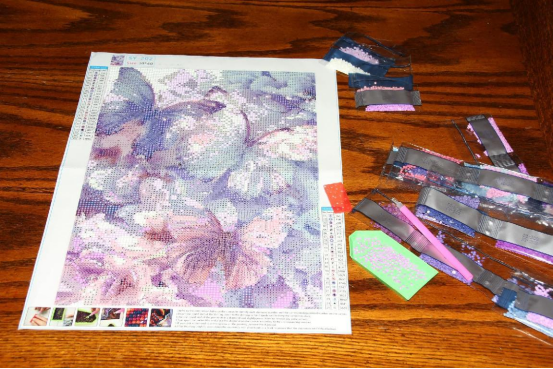
How to seal a diamond painting coaster? (Step-by-step instructions to avoid common pitfalls)
1. First, confirm that the drill bit is fully clamped.
Use a pressure drill to gently press down once to avoid “small air bubbles” appearing after sealing.
2. Clean surface dust.
Use a dry cloth or small brush to remove the dust, allowing the sealant to cover the surface evenly.
3. Apply evenly by spreading or spraying.
Choose according to the sealant you are using:
- Mod Podge: A thin layer is sufficient.
- UV resin: Pour in and gently smooth it out.
- Spray painting: Maintain a distance of 20cm
4. Dry completely (very important)
Drying time for different sealing materials:
- Mod Podge: 1–2 hours
- UV resin: UV lamp 30–60 seconds
- Spray painting: 2 hours or more
Don’t be impatient! Using it before it’s completely dry will affect its transparency and adhesion.
5. Apply cork/silicone base.
Most diamond painting coaster sets come with a base. Seal it before applying the base for a more secure hold.
Which sealing method is most recommended? (Based on your usage habits)
If you want me to summarize in one sentence:
- For everyday use: Mod Podge (best balance)
- For frequent contact with water or as a gift: UV resin (highest quality).
- Light protection: Clear spray paint is sufficient.
Unlike regular diamond painting coasters, diamond painting coasters are designed for frequent use. Therefore, sealing them is often the simplest way to improve durability and also helps stabilize the color and prevent the diamonds from falling off.
Final conclusion: Do diamond painting coasters need to be sealed after completion?
If you want to get a clear answer quickly—
If you intend to actually use coasters: sealing is recommended.
- More wear-resistant
- More waterproof
- Easier to clean
If it’s just for decoration: it’s perfectly fine not to seal it.
The visual effect is more natural, and the diamond texture is more pronounced.
If you care about the lifespan of your coasters, sealing them is the most cost-effective step.
Especially when giving it as a gift, sealing it makes the finished product look more professional.
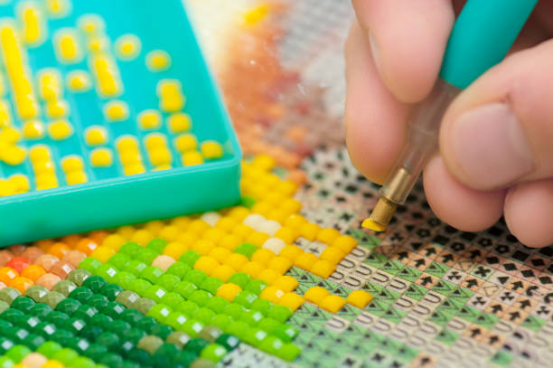
In summary: sealing diamond painting coasters is actually quite simple.
Sealing is meant to make your creations more durable and practical, not to add extra stress. When done correctly, sealing is a quick, simple, and effective process.