large-scale diamond paintings: Easily complete a 30+ hour project

Large diamond paintings (e.g., 40×50 cm) have a striking visual impact, instantly becoming a focal point whether hung as a decoration or given as a gift. However, the 30+ hours of creative time, limited desktop space, and complex operations can easily lead to frustration and anxiety.
. Don’t worry! By mastering a few practical tips, you can not only efficiently advance your creations but also easily manage storage issues, allowing you to fully enjoy the immersive experience of creating. Below, I will share my experience in creating large-scale diamond paintings from four perspectives: space optimization, creative techniques, storage methods, and pre-planning.
Space optimization: a small desktop can also handle a large canvas
Many people mistakenly believe that a large diamond painting needs to take up the entire desk, but this isn’t the case. The key is “partitioned exposure + rolling storage.” In other words, roll up the area not being used and secure it with clothespins or binder clips, leaving only the active work area visible. This way, even a computer desk or folding dining table can easily accommodate a large canvas.
Tip: Don’t completely spread out your canvas. This not only saves desk space but also prevents dust from gathering on unused areas, allowing for better focus and a more stable technique. Honestly, this little habit can save you a lot of trouble cleaning up later.
Alternatively, if your desktop is really small, consider using a portable folding work board or laying a non-slip mat on the floor to keep the large canvas flat during the work without taking up extra space.
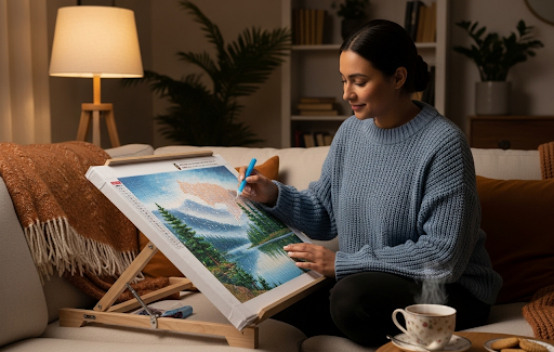
stickiness and reduce Creation tips: Protect stickiness and reduce operational difficulty
creating large canvases by color zoning
, large areas of adhesive are exposed, which can lead to a loss of adhesion. A solution is to temporarily cover the unused areas with baking paper or plastic. This not only maintains the adhesion but also provides a support surface for your hand when crossing difficult areas such as the center of the canvas, preventing accidental removal of the applied diamonds.
Choose diamond shape and difficulty
- Round diamond: the first choice for beginners, it is easy to operate on large paintings and easier to get started.
- Square diamond: The operation is slightly more difficult. It is recommended to practice with small works first and then upgrade after you are familiar with the feel.
Avoid areas with densely packed colors.
especially floral, garden, or complex background patterns. These areas are prone to increased color complexity and increased error rate. It’s best to avoid challenging these designs when first attempting large-scale diamond painting, as this can easily discourage beginners.
Tips to add fun:
Prepare a small color-coded storage box and store the diamonds by color for easier access. If your hands get sore during the operation, use a small clip or tweezers to help you attach the diamonds to reduce fatigue.
it andPsychological tip: When you complete a small area, you might as well stop and appreciate it and feel the sense of accomplishment of each step of the work. This is very effective in maintaining motivation.
Storage method: taking into account both protection and space saving
Temporary storage
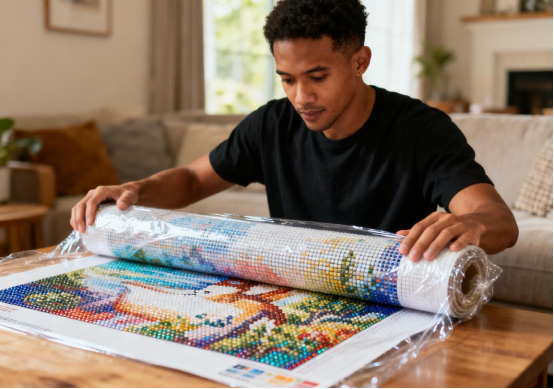
When you’re not working, roll up the canvas with the diamonds facing outward to prevent them from squeezing or deforming. Wrap the canvas in plastic wrap to prevent dust and adhesive loss. Be careful not to roll it too tightly, as this will affect the diamond alignment.
Long-term storage
- Hanging storage: Use a trouser hanger to clamp the edge of the canvas and hang it in a wardrobe or storage room. This saves space and avoids marks caused by folding.
- Painting tube storage: Place the rolled canvas into a hard painting tube and store it vertically to isolate it from moisture and collision. It is especially suitable for works that will not be displayed for a long time.
Bonus tip: Adding desiccant to the paint tube can effectively prevent moisture from causing the diamonds to fall off or lose their stickiness. It can also prevent accidental damage to the work if there are children or pets in the house.
Early planning: clear goals + maintaining motivation
Clarify purpose before creation
Planning to hang it? Measure the wall in your home first, such as above the fireplace or behind the sofa, to ensure the right size.
Limited space at home? Give the finished product as a gift without the hassle of storing it later.
Break down your creative goals
into smaller tasks of 1-2 hours a day. Reward yourself with a cup of coffee or a few minutes of relaxation each time you complete an area. This way, you can stay motivated without feeling overwhelmed by the sheer size of the task.
Set small mental goals
and take photos as you complete each area. This way, you can always see the work taking shape, enhancing your sense of accomplishment. Psychological research shows that visualizing progress significantly increases motivation to complete tasks.
Take proper rest.
Long-term manual creation can easily cause hand soreness and eye fatigue. Taking a break every 45-60 minutes to stretch your wrists and shoulders can effectively prevent fatigue accumulation and ensure the quality of subsequent creations.
Bonus Tip: Improve Your Creative Efficiency
- Prepare all the tools: tweezers, color separation tray, diamond sticking pen, and spare wax blocks. Keep them at hand to reduce the time of looking for tools.
- Adequate lighting: Large-scale diamond painting requires high lighting requirements. A combination of desk lamp and natural light is ideal, which helps with color discrimination and reduces visual fatigue.
- Music blessing: Create while listening to light music; you will feel happy and have a better creative experience.
Many veteran players have said that these small details, although insignificant, can greatly enhance the creative experience and make the 30+ hour production process easy and fun.
Conclusion
A large-scale diamond painting is a two-way journey of patience and accomplishment. By mastering these tips on space optimization, creative techniques, storage methods, and pre-planning, you can not only easily overcome the core challenges of large-scale diamond painting but also experience the joy of your work gradually taking shape as you gradually fill the diamonds.
Finally, if you like, I can also help you organize a large-scale diamond painting daily creation schedule, reasonably arrange your daily creation time, let you make steady progress, easily complete a 30+ hour large project, and make the whole process more efficient and interesting.