Diamond Painting Round Diamonds vs. Square Diamonds: A Selection Guide for Beginners to Advanced Users, Easily Choosing the Right Sparkling Partner for You

new to diamond painting often struggle with choosing between round and square diamonds. While they may seem like just a difference in shape, the final decision can be fraught with uncertainty: which is best? The answer isn’t absolute; it all comes down to your desired creative experience and final result. Whether you’re a beginner or an advanced artist looking to challenge yourself with complex patterns, this comparison guide will help you quickly choose the right “sparkling partner.”
First, understand the basics:the core difference between round diamonds and square diamonds
The difference between round diamonds and square diamonds goes beyond appearance. They differ significantly in size, difficulty in applying the diamond, and the final look of the finished product. The following three factors are crucial:
1. Size and detail
- Round diamonds: With a diameter of approximately 2.8 mm, each diamond can cover a larger area, so fewer diamonds are needed for the same size canvas. For example, an A4 canvas can be completed with approximately 2,000 diamonds. The advantage is that they are faster to work with, and the finished piece is more pleasant.
- Square diamonds: With a side length of 2.5 mm, they are smaller than round diamonds, allowing for more diamonds per unit area. For the same A4 canvas, you might need over 2,500 square diamonds, allowing for more refined detail. For example, square diamonds can more clearly show the texture of a person’s hair or a flower.
2. Error tolerance of diamond pasting
- Round diamonds: There are no direction restrictions, and they can be connected naturally at any time. Even if the position is a little off, it will not affect the overall effect. It is especially suitable for beginners or children.
- Square diamonds: The four corners must be aligned with the grid to achieve a seamless splicing. Once they are crooked, gaps are likely to appear, requiring patience and repeated adjustments. This is more difficult, but the finished product will be neater.
3. The appearance of the finished product
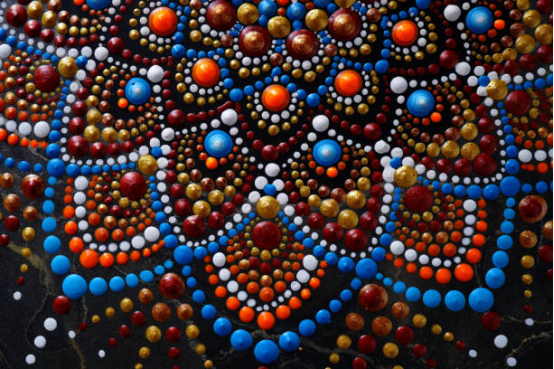
- Round diamonds: Because they have many facets, they have a vibrant luster and sparkle, especially beautiful under bright light. However, the small gaps between the diamonds create a mosaic-like texture, making them more suitable for lively designs like cartoons and flowers.
- Square diamonds: When assembled, they create virtually no gaps, completely covering the canvas. The effect is like a high-definition mosaic, with crystal-clear details. They’re particularly well-suited for realistic styles like landscapes and portraits. Another added bonus: the square diamonds make a “clicking” sound when they align, which many find incredibly relaxing.
2. How to choose? Priority options for different groups of people
Should you buy round diamonds or square diamonds? Don’t just follow the crowd; first, find out which category you belong to:
1. Beginners/people with limited time—round diamonds are easier
- Easy to use: no need to worry about alignment, just stick it on.
- Quick completion: A small A5 diamond painting can be finished in 1-2 days, giving you a sense of accomplishment quickly.
- Diamonds are not easy to fall off: Because of the tiny gaps, the diamonds are more stable and not easy to fall off when the canvas is bent.
2. Experienced/challenged people: Square diamonds are more suitable
- High detail restoration: can show more layers, and the gradient effect is smoother.
- The finished product has a more “high-end feel”: neat and complete, it looks like a professional work when hung at home.
- The creative process is more immersive: it requires patience and is more stress-relieving.
3. Choose by pattern style
- Round diamonds are more suitable for cartoon characters, simple flowers, text patterns, and sparkling and lively designs.
- Square diamonds are more suitable for landscapes, portraits, complex IP works, and when detailed restoration is required.
3. Advanced gameplay: special diamonds + tool blessing
In addition to the common round diamonds and square diamonds, you can also add some special diamonds to your work:
- AB diamond: with iridescent effect, suitable for embellishing eyes and flower centers.
- Luminous diamond: absorbs light during the day and emits soft light at night, making it very cool for night scenes.
- Frosted diamond: matte texture, suitable for expressing clouds and snow.
- Metal diamond: electroplating effect, used to embellish accessories or frames, very textured.
There are also some tips on tools:
- It is best to use a ruler and roller with square drills to keep them neat and firm.
- Round diamonds can be painted with a dust brush and a multi-drill pen, which makes filling large areas faster.
- Regardless of the type of diamond, a storage box and light board are standard, which can not only separate colors but also protect the eyes.
4. Summary: Try small size first, then upgrade slowly
If you’re still hesitant, the easiest way is to experiment.
Start with a small A5 drawing using round diamonds to experience the joy of applying diamonds. Once you’ve mastered the technique, move on to smaller square diamonds to experience the satisfaction of creating detailed pieces. Many artists eventually discover that both are equally enjoyable: the dynamics of round diamonds and the refinement of square diamonds, and alternating them according to different patterns creates even better results.
Ultimately, the allure of diamond painting isn’t that round diamonds are always better than square diamonds, or vice versa. It’s about finding your own rhythm and joy in the process. Choose a pattern you like, prepare your tools, and let the diamonds on your fingertips slowly create your own sparkling moment!