Diamond Painting Glue Review: Applicable Scenarios and Durability of Different Glue Materials

If you love diamond painting, you know that one small detail can ruin the entire piece—the glue! No matter how beautiful the diamond beads are, if they don’t stick well or fall off after a while, all your hard work is wasted. Today, we’ll talk about all things diamond painting glue, from materials and applicable scenarios to a comprehensive evaluation of its durability, so you can choose the right glue and avoid the “diamond falling off nightmare” during your creative process.
Table of Contents
Why diamond painting glue is crucial
secure butIn the creation of diamond paintings, the importance of glue is often underestimated. It not only determines whether the diamonds are secure, but also directly affects the beauty and lifespan of the artwork. Even if your diamonds are arranged perfectly, if the glue is not stable enough, diamonds may fall out or become loose in some areas after a year, which is heartbreaking.
Choosing the right glue can solve three common pain points:
- Insufficient adhesion: The original adhesive on the canvas has weakened, making it difficult to attach the diamonds securely.
- Long-term display: During the display or framing of the artwork, diamonds may easily fall off due to external forces.
- Material incompatibility: If the diamonds are attached to non-traditional materials (such as wood, glass, or metal), ordinary glue may not be able to secure them completely.
scenario andThe solution is to select the appropriate diamond painting glue based on the material and usage scenario, and combine it with thin application, zoned application, and sealing protection to effectively improve the durability of the artwork.
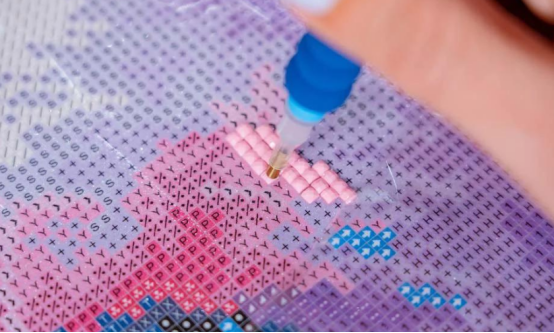
Common types of diamond painting glue
Different types of glue have their own advantages and disadvantages. Understanding their characteristics can help you make a better choice.
1. Water-based adhesive
.Water-based glue is the most commonly used and safest type. It is characterized by sufficient adhesion, transparency after drying, and no pungent odor. It is easy to control during use and does not easily yellow or mold after drying, making it ideal for beginners and regular canvas diamond painting .
advantage:
- Safe and non-toxic, suitable for home use.
- It will become transparent after drying, keeping the image clean.
- The viscosity is moderate, allowing for slight diamond adjustments.
shortcoming:
- Slightly weak compatibility with non-traditional materials
- If the display is to be kept in a humid environment for an extended period, additional reinforcement may be necessary.
2. Oil-based glue
.Oil-based glue has extremely strong adhesion, but it has a strong odor, so good ventilation is necessary when using it. It is suitable for works that require long-term fixation of diamonds and are not intended to be moved, especially diamond paintings that are hung on the wall or displayed for a long time .
advantage:
- It has extremely strong adhesion, and the diamonds are not easy to fall off.
- Suitable for long-term display or special decoration projects
shortcoming:
- Strong smell
- It may turn yellow after drying.
- Careless handling can easily get your hands or the diamond surface dirty.
3. Double-sided adhesive tape (DSA)
; therefore,Some diamond painting kits use pre-applied double-sided tape. Initially, the diamonds adhere well, but over time, bubbles may form or parts may peel off. Double-sided tape is highly susceptible to temperature and humidity fluctuations, therefore it is not recommended as a primary adhesive for long-term preservation.
Adhesive Selection Guide for Different Scenarios
1. For beginners or those with regular canvas projects
,For standard diamond painting using canvas and resin diamond particles , water-based glue is usually the safest choice. It is safe, easy to use, and transparent after drying, ensuring the diamonds adhere firmly while also allowing beginners to make fine adjustments during the application process.
Useful tips:
- Test the diamonds before starting to confirm their adhesion.
- Apply glue thinly to avoid bubbles caused by applying it thickly.
- Partitioning operations, especially on large canvases, reduces the error rate.
2. Projects using non-traditional or mixed materials
-compatibleIf you want to attach diamonds to non-canvas materials such as wood, glass, metal, or fabric, you need to choose a multi-material compatible adhesive. This will ensure the diamonds adhere firmly and won’t easily fall off even during long-term display.
Usage tips:
- Clean the substrate surface to ensure it is free of dust or grease.
- After applying the glue, let it dry slightly for a short while, allowing the glue surface to become slightly tacky, before attaching the diamonds.
- For thick diamond particles, you can press gently to increase adhesion.
3. After completion, the artwork will be framed or displayed permanently.
After the artwork is completed, applying sealant can increase its durability, provide dust and moisture protection, and enhance the diamond’s luster, making the artwork look more upscale. Suitable for wall hanging or long-term display.
; otherwise,Note: If you want the diamond to be adjustable, avoid using permanent sealant in one go, otherwise the diamond will not be able to move.
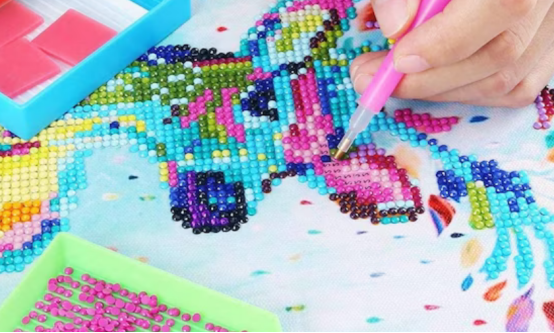
Practical experience sharing
Many diamond painting enthusiasts shared their experiences in the community:
- When the canvas loses its stickiness, you can reapply a thin layer of water-based glue to restore the diamond’s adhesion.
- Sealant can effectively prevent dust, moisture, and diamonds from falling out, but it is essential to ensure that a specialized sealant is used.
- Avoid using super glue or 502 glue, as these types of glue are difficult to apply and can easily cause fogging on the diamond surface or damage to the canvas.
In addition, some people like to use tweezers to gently adjust the position of the diamonds during the application process, while the glue remains sticky after it dries. This ensures the adhesion while making the arrangement of the diamonds neater.
Tips to further improve durability
- For large canvases, it’s recommended to apply only a small amount of glue and attach rhinestones one at a time to minimize errors.
- Control the thickness of the glue: too thick and it will easily cause air bubbles; too thin and it may not stick properly.
- Local reinforcement: For edges or corners, apply a thin layer of glue as needed.
- Avoid humid environments: High humidity slows down the drying of the glue and may reduce its adhesiveness.
- Regular checks: During the exhibition, diamonds can be checked occasionally for looseness and repaired promptly.
These details can significantly improve the durability of diamond painting glue and extend the life of your artwork.
Summary and Recommendations
Choosing the right diamond painting glue isn’t complicated; simply select based on the material and the intended use.
- Canvas/Beginner → Water-based glue, safe and easy to use, suitable for beginners
- Multi-material/DIY Creation → Multi-material compatible glue to ensure diamond stability
- Long-term display/framing → Sealant to increase durability and dustproof effect
Mastering these techniques will prevent diamonds from falling out of your diamond paintings, and your artwork will maintain its beauty for a long time. Hopefully, this diamond painting glue review will help you choose the right glue, making every creative process smooth and enjoyable, and ensuring your artwork shines for a long time.